
You may ask if it is safe to practice tattooing at home. Cleanliness is very important. If you do not stay safe, you can get sick. Bloodborne pathogens, infections, and allergies are some risks. Always keep your workspace clean and use the right tools. Watch professionals and learn slowly, step by step.
Key Takeaways
Always keep things clean. Use fresh needles. Wear gloves. Clean your workspace before you start. Clean it again after you finish. This helps stop infections.
Begin with easy designs. Practice on fake skin or fruit. This helps you get better. You will feel more confident. You will not make permanent mistakes.
Think about joining online classes. These classes teach important skills. They show you how to stay safe. You can meet other artists there.
Is It Safe to Practice Tattooing?
Common Risks
Tattooing at home can be risky. Many people do not know how unsafe it is without good tools. Here are some problems you might have:
You can get infections like HIV, Hepatitis B, Hepatitis C, or tuberculosis if you use dirty tools.
Skin issues can happen, like scars, allergies, or growths such as melanoma.
Some people do not like their tattoos later. This can make them feel sad or regretful.
Home tattooing causes more infections than work in a studio. If you are not trained, you might spread germs on dirty surfaces. Germs like bacteria and viruses can move from one place to another. You cannot see germs, but they are still there.
Tip: Tattooing at home, called “backyard” tattooing, is dangerous because people use cheap or unsafe tools.
Safety Priorities
You can be safer if you focus on safety first. Always use new needles and wear gloves. Clean your area before and after you tattoo. Do not reuse ink or share tools. Try to copy how studios keep things clean. They use strong cleaning supplies and follow strict rules.
Wash your hands before you start.
Put clean wraps on your work area.
Throw away used needles in a safe box.
If you want to be safe, learn from experts and go slow. Your health is more important than being fast or looking cool.
Prepare Your Workspace
Clean Setup
Your tattoo area should be safe and clean. A clean space helps keep everyone healthy. First, wash your hands with antibacterial soap. Put on disposable gloves before you touch anything. Cover your work surfaces with barriers you can throw away. This helps stop germs from spreading. Use hospital-grade disinfectants to clean your table, chair, and tattoo machine.
Always use new ink caps, needles, and gloves each time. Put used needles in a sharps container right after you finish. Clean and sterilize things you use again. Keep clean tools in sealed containers.
Poseidon cares about keeping you safe. Their tattoo kits, like the POSEIDON Wireless Tattoo Machine Kit-hm126, have parts that are easy to clean. The wireless design helps keep your space neat and stops cords from getting tangled.
Organize Tools
A tidy workspace helps you focus better. Only keep what you need on your table. Use holders for your ink cups. Store machines, gloves, and supplies in drawers or containers.
Here’s a simple checklist for your setup:
Tattoo machine
Ink cups
Stencils
Extra needles or cartridges
Sharps container
Sanitization spray
When your tools are organized, you work faster and safer. You also lower the chance of accidents or germs spreading.
Practice Tattooing Fundamentals
Drawing Skills
Drawing is the heart of every tattoo artist’s journey. Before you even touch a tattoo machine, grab a pencil and start sketching. You learn so much by drawing on paper. Try simple shapes, lines, and patterns. This helps you understand how to build a design from scratch. When you draw every day, your hand gets steadier and your eyes get sharper. You start to see how lines connect and how shading brings a picture to life.
Practice drawing lines that are straight and smooth.
Try shading with different pressures to see how dark or light you can make an area.
Look at art from other tattoo artists. Notice how they use lines and shapes.
Use different tools like pencils, pens, or even a tablet.
Tip: Practicing on paper first helps you avoid mistakes when you practice tattooing on skin or synthetic surfaces.
Using Weighted Pens
A weighted pen feels more like a real tattoo machine. When you use one, your hand learns how to control the weight and movement. This makes it easier when you switch to a tattoo machine. Try tracing designs with a weighted pen. Focus on keeping your lines steady and your grip relaxed.
You can also watch videos of professional tattoo artists. See how they hold their machines and move their hands. If you want to get even better, look for beginner tattoo classes or safety certification courses. These classes teach you the right way to practice tattooing and keep everyone safe.
Tattoo Equipment Essentials
Machines and Needles
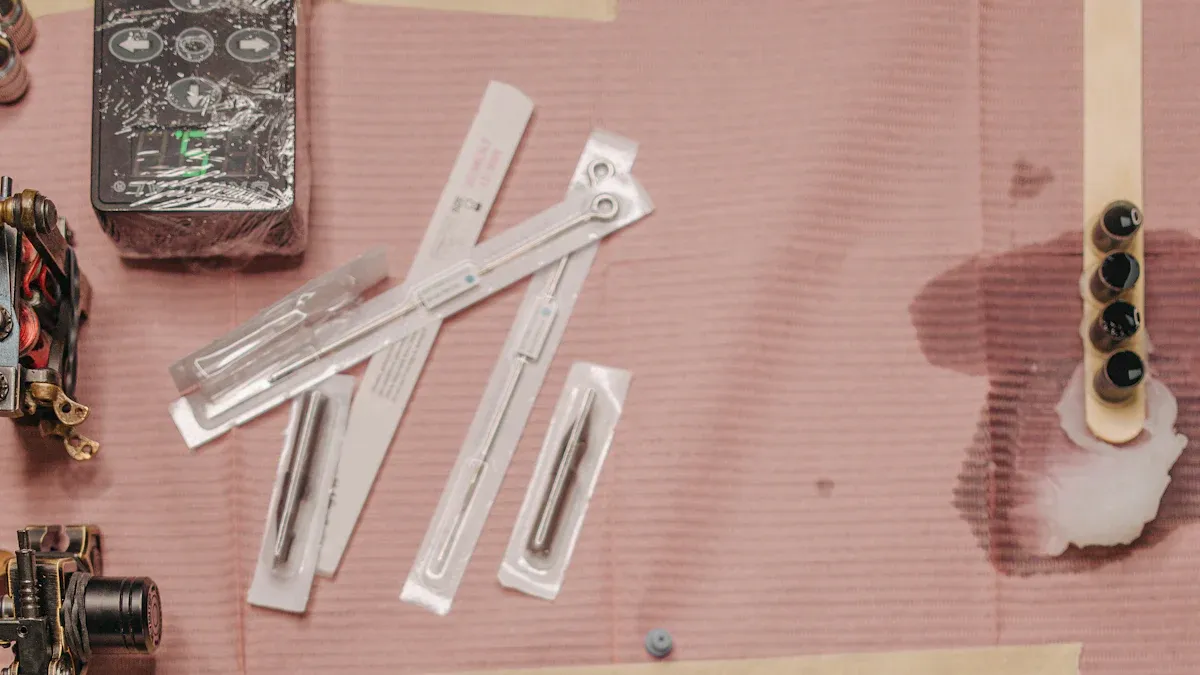
You need the right tools to practice tattooing at home. The tattoo machine is the most important part. Most people who are new use rotary machines or wireless tattoo pens. Rotary machines are light and do not make much noise. Coil machines are heavier and sound louder. Rotary machines are easier to take care of, so you can practice more.
Here is a simple chart that shows the differences:
Feature | Rotary Machine | Coil Machine |
|---|---|---|
Weight | Light | Heavy |
Noise Level | Quiet | Loud |
Needle Motion | Smooth and steady | Strong and sharp |
Maintenance | Not much needed | Needs a lot of work |
Best For | Beginners, shading | Bold lines, experts |
Power | Medium | Strong |
You also need the right needles to start. Use RL (Round Liner) and RS (Round Shader) cartridges. These help you learn how to make lines and shade.
Here is a list of things you need for your kit:
Tattoo machine (rotary or wireless pen)
Tattoo cartridge needles (RL and RS)
Grip tape for comfort
Tattoo ink (black and some colors)
Power supply
Stencil paper and transfer gel
Practice skin
Ink cups, aftercare film, cleaning pads, needle holders
Storage table
Comfortable chair
Tip: Always use new needles and keep your tools neat. Clean tools help you stay safe.
Poseidon Wireless Kit-hm126
If you want an easy machine, try the POSEIDON Wireless Tattoo Machine Kit-hm126. This kit is good for people who are just starting. The wireless design lets you move around without cords. You get all the things you need to begin right away. The tattoo gun is simple, so you can focus on your art.
Feature | Benefit for Beginners |
|---|---|
Wireless Design | Move easily, no wires to mess up |
Everything you need to begin | |
Advanced Tattoo Gun | Easy to use, good for learning |
This kit gives you comfort, control, and good quality. Using good tools helps you get better and feel more sure of yourself.
Practice Tattooing on Safe Surfaces
Synthetic Skin
You want to get as close as possible to real tattooing before you work on a person. Synthetic skin is your best friend for this. It feels a lot like real skin and lets you see how your lines and shading will look. You can try new designs and techniques without worrying about making a mistake. This helps you build confidence and skill.
Here’s a quick look at why synthetic skin works so well:
Benefit | Description |
|---|---|
Low-Risk Environment | You can practice without fear of permanent mistakes. |
Building Confidence | You get used to the tattoo machine and how it moves. |
Flexibility & Availability | You can practice anytime you want. |
Understanding Designs | You can test out new ideas and styles. |
When you choose a practice surface, look for these things:
Material that feels like real skin, such as silicone or rubber.
Texture that helps you learn how to control your needle.
Size that fits your design.
Durability for repeated use.
Reusability to save money.
Poseidon offers practice pads that check all these boxes, making it easier for you to improve your skills.
Fruit Practice
You can also use fruit to practice tattooing. Bananas, oranges, and lemons are popular choices. Their skin gives you a different feel and helps you learn how to control your depth and pressure. Always wash the fruit before you start. This keeps your area clean and safe.
Tip: Bananas are great for beginners because their peel is soft and easy to work with. Oranges and lemons have a tougher skin, so they help you practice steady lines.
Trying both synthetic skin and fruit gives you a well-rounded experience. You get to see how your art looks on different surfaces and learn what works best for you.
Tattoo Hygiene and Safety
Skin Anatomy Basics
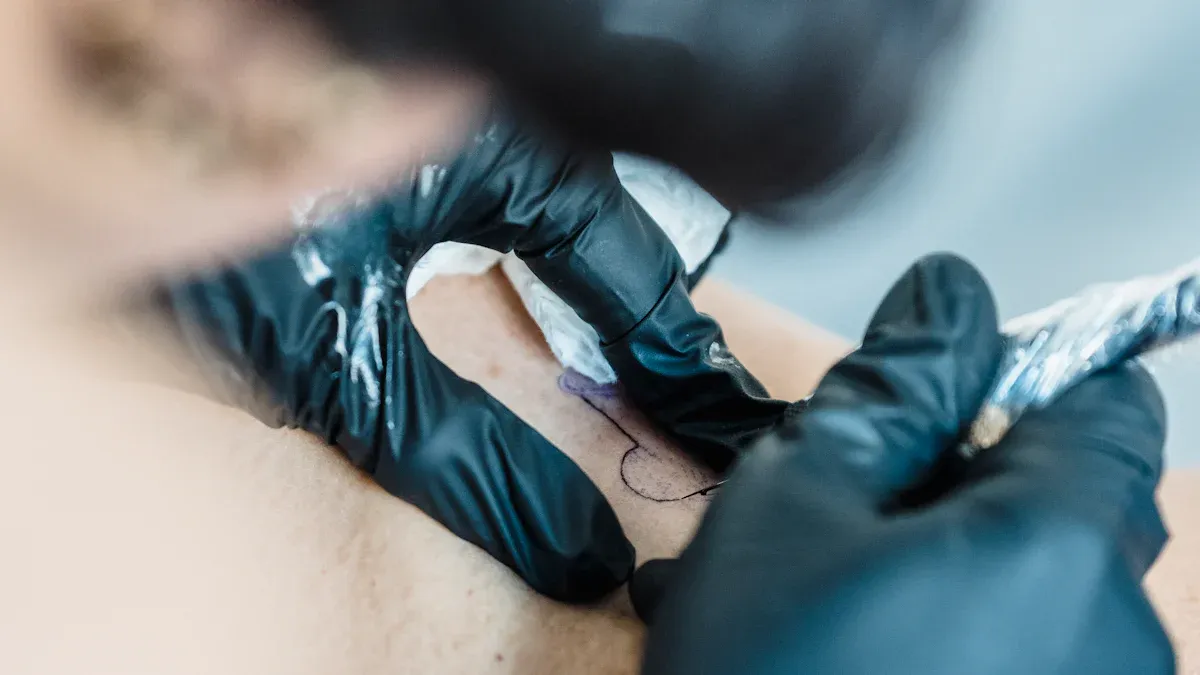
Before you use a tattoo machine, you should know about skin. Skin has three main layers. Each layer does something different when you practice tattooing. Here’s a simple table to help you learn:
Skin Layer | Description | Importance for Tattooing |
|---|---|---|
Epidermis | The outermost layer, acts as a protective barrier against environmental factors. | Ink is not deposited here; it sheds dead cells, affecting tattoo longevity. |
Dermis | The middle layer where tattoo ink is injected for long-lasting effects. | Essential for ink retention; contains collagen for strength. |
Hypodermis | The deepest layer, also known as the subcutaneous layer. | Provides cushioning and insulation but is not involved in ink retention. |
You want the ink to stay in the dermis. If you go too shallow, the tattoo fades because the epidermis sheds. If you go too deep, you might reach the hypodermis. This can make lines blurry and hurt more. The dermis has sweat glands, blood vessels, and nerves. That is why tattoos can sting and need time to heal. Everyone’s skin is different, so tattoos heal in their own way.
Tip: Learn about skin before you start. Good tattoos come from good knowledge.
Sterilization Steps
Clean tools and a safe setup keep you and others safe. Germs and bloodborne diseases can spread if you skip steps. Here’s how to keep everything clean:
Assemble Sterilization Tools
Get what you need: an autoclave, gloves, wraps, and indicator strips.Prepare Equipment
Take apart your tattoo machine and rinse each part. Scrub off any ink or dirt.Load the Autoclave
Wrap your tools and add indicator strips to check if it works.Operate the Autoclave
Set the right temperature and pressure. Start the cycle and wait until it ends.Post-Sterilization
Let tools cool down. Check the strips. Store tools in a clean, closed container.
If you do not have an autoclave, use single-use, pre-sterilized needles and cartridges. Never reuse needles. Always wear new gloves and a face mask. Use drape sheets or aprons to keep clothes clean and stop germs.
Here’s a quick checklist for personal protective equipment (PPE):
Disposable gloves
Face masks
Aprons or drape sheets
Alert: Do not touch clean tools with dirty gloves. Change gloves if you touch anything not clean.
Safe disposal is important. Used needles go in a sharps container. You can buy one or use a thick detergent bottle with a tight lid. Throw away gloves, wipes, and ink cups in a biohazard bag. Do not pour leftover ink down the drain. Put it in a sealed bag and throw it away with other waste.
Tattoo needles: Use a sharps container.
Ink and contaminated items: Use a biohazard bag.
Gloves and paper towels: Throw away in biohazard containers.
Note: Safe disposal keeps your home and the environment healthy.
You can be safer by getting a Bloodborne Pathogens Certification. This training teaches you how to handle blood, clean tools, and act fast if there is an accident. You will learn how to protect yourself and others. Certification shows you care about health and safety, and it builds trust.
Tip: Many online courses offer Bloodborne Pathogens Certification. Pick one that fits your schedule.
When you practice tattooing at home, safety comes first. Clean tools, the right gear, and good habits protect everyone. Make hygiene your top priority every time.
Advancing Your Skills
Gradual Progression
You might feel excited to try big, detailed tattoos right away. Slow down and start with simple designs. Begin with straight lines, small shapes, or basic patterns. As you practice, you will see your hand get steadier and your confidence grow. Each time you finish a design, you learn something new. This step-by-step approach helps you build real skill and creativity. Over time, you connect more with your art and find your own style.
Tip: Master the basics before you move to complex work. This makes your journey more rewarding and less stressful.
Avoiding Mistakes
Every beginner makes mistakes, but you can avoid many of them if you know what to watch for. Don’t rush to tattoo yourself. Practicing on your own skin too soon can lead to infections, allergic reactions, or even make skin problems worse. Wait until you have enough experience and feel truly ready.
Here are some common mistakes new tattoo artists make and how you can avoid them:
Forgetting to take breaks—rest often to stay focused.
Not following hygiene rules—always keep things clean.
Skipping practice—draw and tattoo on fake skin or fruit first.
Ignoring feedback—listen and learn from others.
Not preparing your tools—double-check everything before you start.
Overestimating your skills—stick to simple designs until you improve.
Not learning about your equipment—get to know your tattoo machine.
Missing small details—pay attention to every part of your design.
Stay patient and keep learning. Every step forward makes you a better artist.
Poseidon Safety Tips
Best Practices
You need to be careful when you practice tattooing at home. Here are some important tips to help you stay safe:
Wash your hands before and after you work.
Put on new gloves every time you touch tools or skin.
Use only new needles and ink caps one time.
Clean your workspace with strong disinfectant.
Cover your tables with things you can throw away.
Put used needles in a sharps container right away.
Do not use ink again or let others use your tools.
Take breaks to check your area and keep it neat.
Tip: A clean workspace helps you do better and keeps you safe. Poseidon’s wireless tattoo kits help you keep your area neat and stop cords from getting messy.
Learning Resources
You can learn about safe tattooing from online classes and guides. Many courses teach you about tools, cleaning, and tattoo skills. Here is a quick look at a popular online class:
Feature | Description |
|---|---|
Course Name | |
Duration | 16 hours of videos and hands-on assignments |
Accreditation | Internationally recognized by CPD Standards Office |
Curriculum | Equipment basics, sterilization, advanced techniques, health/legal training |
Practical Learning | Hands-on projects to simulate real tattooing situations |
Support | Ongoing help by phone, WhatsApp, or email |
You can also find free beginner classes that teach the basics:
Tattoo Basics for Beginners
Learn about machines, needles, and cleaning
Practice tattooing on fruit
Find out how to stop germs from spreading
Tips for making your workspace safe
If you want more advice or want to meet other artists, go to Poseidon Tattoo Supply’s official website. You will find guides, product info, and help to make you a safer and better tattoo artist.
You can practice tattooing at home in a safe way if you do these things:
Make sure your tools are always very clean.
Only use needles that are already sterilized.
Keep your work area neat and free from dirt.
Watch and learn from people who are experts.
Keep wanting to learn, practice often, and be careful and respectful when you join the tattoo community.
FAQ
Can you practice tattooing on yourself at home?
You should not tattoo yourself until you have lots of practice. It is risky and can cause infections or scars.
What is the best surface for beginners to practice tattooing?
You can use synthetic skin or fruit like bananas. These surfaces help you learn without hurting anyone.
How often should you clean your tattoo equipment?
You need to clean your equipment before and after every session. This keeps you and others safe from germs.