
How Long Does It Take to Learn Tattooing? A Realistic Timeline for 2025

Learning how to tattoo is both exciting and intimidating. If you’re reading this, you’re probably wondering:
How long does it actually take to become confident with a tattoo machine?

The truth is—tattooing isn’t something you master overnight, but the good news is:
with the right tools, practice routine, and guidance, you can make real progress within weeks, not years.

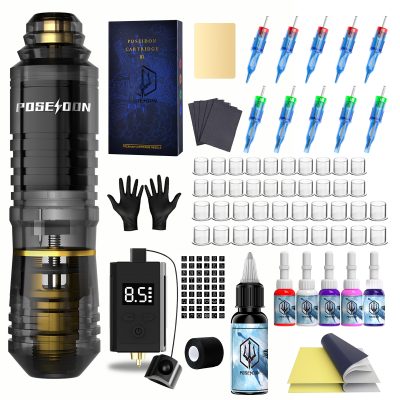
This guide breaks down the timeline from total beginner to intermediate artist, what skills you need at each stage, and how a high-quality beginner setup (like a Poseidon kit) can accelerate the process.

👉So, How Long Does It Really Take?

On average, it takes 1–3 years to become a competent tattoo artist — depending on your background, equipment, and training environment. Below is a realistic breakdown to help you understand the journey.

1. Stage One: Foundational Art Skills (2–6 Months)

You don’t need to be a legendary painter, but strong fundamentals help massively.
During this stage, beginners typically practice:

  • Line work

  • Shading techniques

  • Proportions and anatomy

  • Composition and tattoo-style design

  • Drawing on paper, iPad, or synthetic skin

🎯Tip: Daily sketches accelerate progress more than long study sessions.

📌 Recommended read :Beginner Tattoo Guide: Why Tattoo Pen Kits Are the Smartest First Choice

未标题-3(7)

2. Stage Two: Tattoo Theory & Safety Training (1–3 Months)

Before touching a tattoo machine, every beginner must understand:

  • Hygiene standards

  • Cross-contamination prevention

  • Bloodborne pathogens

  • Machine operation basics

  • Skin anatomy

  • Needle groupings & ink behavior

Many countries require certificates before you can tattoo professionally.

3. Stage Three: Practicing on Synthetic Skin (3–6 Months)

This is where your real technique begins to form.
Practicing on fake skin helps you learn:

  • Needle depth

  • Machine control

  • Line stability

  • Whip shading & packing

  • Working with different strokes / RPMs

You’ll also begin choosing between a wireless pen machine, rotary, or coils during this period.

📌 If you’d like to know more, you can search on this website.
https://www.cdc.gov     CDC Tattoo & Piercing Safety Guidelines

4. Stage Four: Apprenticeship or Mentorship (6–24 Months)

This is the longest and most important stage. Most apprenticeships last 1–2 years.

During this time, you’ll learn:

  • How to stencil properly

  • Tattoo placement strategies

  • Working with different skin types

  • Client consultation & aftercare

  • Designing flash sheets

  • Shop etiquette & workflow

  • Real skin technique refinement

Apprentices typically start tattooing friends or volunteers under supervision.

5. Stage Five: Tattooing Real Clients Independently (6–12 Months)

Even after your apprenticeship, it takes months to feel confident tattooing clients alone.

You’ll practice:

  • Clean, smooth lines

  • Saturated color packing

  • Gradual black & grey shading

  • Real-world time management

  • Style specialization (fine line, realism, traditional, geometric, etc.)

Most artists say they only start feeling “good” after tattooing 50–100 real clients.

Total Time to Learn Tattooing

StageDuration
Art Fundamentals2–6 months
Tattoo Theory & Safety1–3 months
Fake Skin Practice3–6 months
Apprenticeship6–24 months
Independent Practice6–12 months

🎯 Total: 1–3 Years (Typical Learning Curve)

Some pick it up faster, especially if they already have strong art backgrounds. Others take longer depending on mentorship and equipment.

What Speeds Up the Learning Process?

1. High-quality Training Equipment

Unstable or weak machines limit your progress. Beginners benefit from machines with:

微信图片_20250319111627

2. Consistent Daily Practice

10 minutes daily > 3 hours once a week.

3. Learning From Professionals

A mentor cuts your learning time in half.

4. Specializing in One Style at First

Fine line, minimalism, micro realism, tribal, etc.

5. Building a Strong Portfolio

Online or physical — consistency matters more than quantity.

Final Thoughts

Learning tattooing takes dedication, patience, and the right tools — but it’s absolutely achievable for anyone willing to practice consistently. Whether your goal is to become a professional studio artist or a private home-based tattooist, the timeline above gives you a realistic roadmap.

If you’re starting your tattoo journey, upgrading your machine, needles, or beginner kit can make your learning curve much smoother.

👉 Check out POSEIDON Tattoo Supplies for beginner-friendly and professional-grade equipment.www.poseidontattoos.com

Leave a Comment

Your email address will not be published. Required fields are marked *

Free shipping on orders over $199